
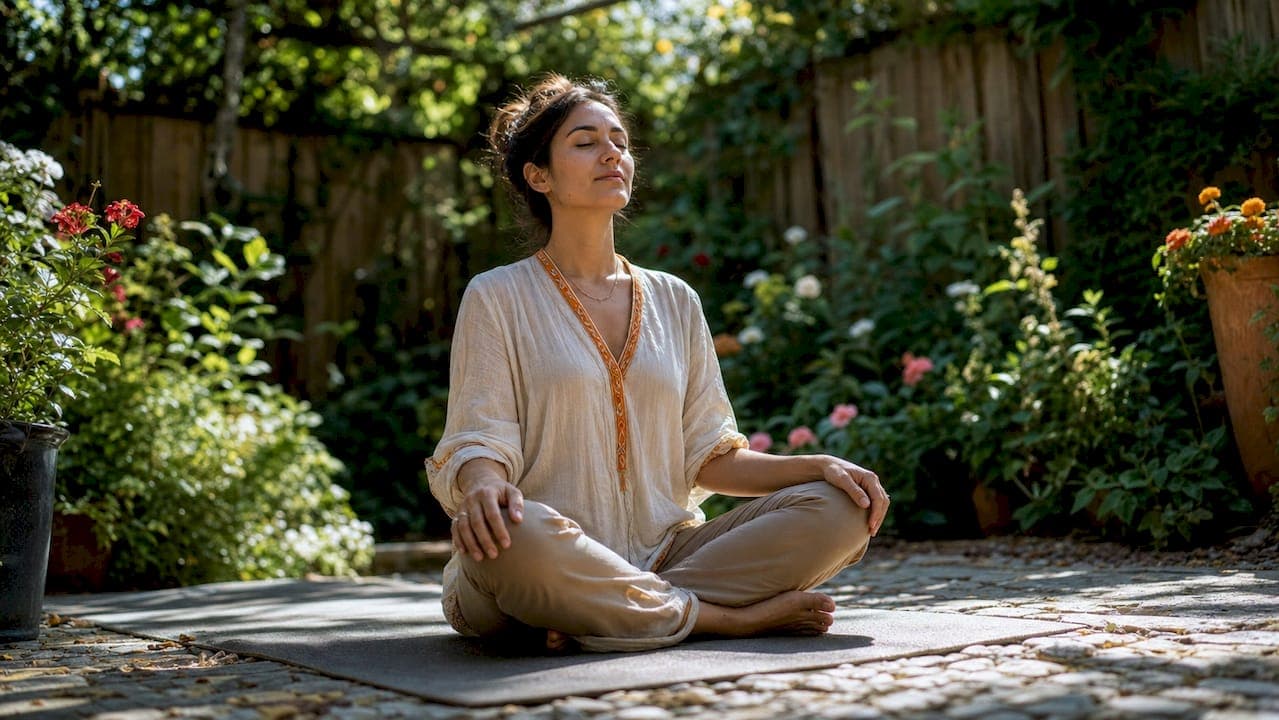
Nervous system regulation is the process of shifting your body's stress response toward a calm, balanced state using physiological signals rather than willpower alone. If you've been running on something that feels less like fuel and more like fumes, your nervous system is likely stuck in a pattern it was never meant to sustain. The good news is that state flexibility is the actual goal, not permanent calm, and the body has built-in pathways you can learn to use. This guide gives you the science, the tools, and the step-by-step methods to start building real resilience today.
What is nervous system regulation and why does it matter?
Nervous system regulation is defined clinically as the ability to move fluidly between autonomic states in response to your environment. The autonomic nervous system (ANS) operates below conscious awareness, constantly scanning for threat through a process called neuroception. Polyvagal theory, developed by Dr. Stephen Porges, identifies three primary states: ventral vagal (safe and social), sympathetic (fight or flight), and dorsal vagal (freeze or shutdown). A regulated nervous system does not live in one state. It shifts between them appropriately, the way a healthy heart rate rises and falls with demand.
Chronic stress and burnout trap people in sympathetic or dorsal vagal states for far too long. When that happens, the body stops distinguishing between a looming deadline and a genuine physical threat. Rapid-response techniques typically work within 60–90 seconds, but shifting your baseline state requires consistent practice over weeks. That distinction matters. Quick relief is real, but lasting nervous system balance is built over time, not found in a single breathing session.

How does the autonomic nervous system respond to stress?
The ANS has two primary branches. The sympathetic branch accelerates your heart rate, tightens your muscles, and floods your bloodstream with cortisol and adrenaline. The parasympathetic branch, governed largely by the vagus nerve, slows everything back down. Polyvagal theory adds a third layer: the dorsal vagal state, which produces the freeze response, a kind of biological shutdown when threat feels inescapable.
Dysregulation happens when these systems lose their flexibility. Chronic anxiety, persistent fatigue, difficulty concentrating, and emotional reactivity are all signs that the nervous system has lost its ability to return to baseline. Willpower cannot fix this. Polyvagal-informed interventions work because they send direct physiological signals of safety to the body, bypassing the thinking brain entirely. A systematic review of 26 studies confirmed these approaches significantly reduce PTSD symptoms, anxiety, and emotional dysregulation by shifting autonomic states toward ventral vagal. That is not a small finding.
Pro Tip: If you feel numb, flat, or disconnected rather than anxious, you may be in a dorsal vagal freeze state. Movement, not breathing, is your first tool.
| Autonomic state | Physical experience | Regulation direction |
|---|---|---|
| Ventral vagal | Calm, connected, focused | Maintain and reinforce |
| Sympathetic | Anxious, racing heart, tense | Slow breath, sensory grounding |
| Dorsal vagal | Flat, numb, disconnected | Gentle movement, rhythm |
What tools and prerequisites support nervous system regulation?
Three categories of tools form the foundation of any regulation practice: breathwork, sensory grounding, and movement. Each one works by sending bottom-up signals of safety through the body, not top-down instructions from the mind. Successful regulation bypasses cognition entirely, which is why thinking your way calm rarely works under real stress.
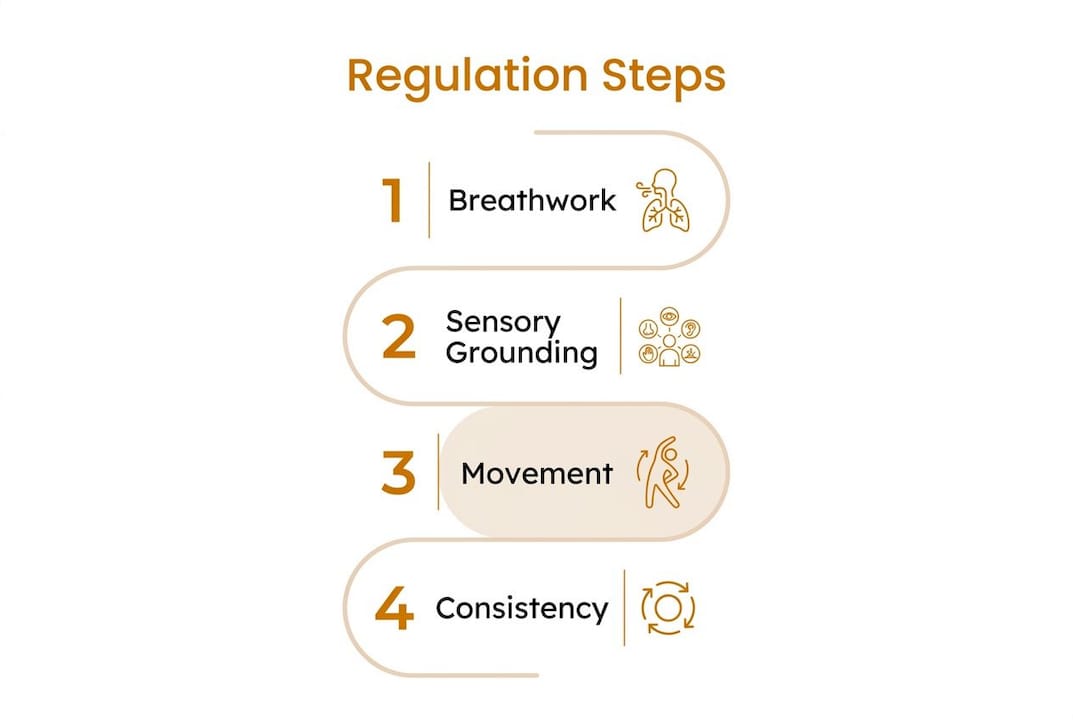
Before you begin, a few conditions help. You need a space where you feel physically safe, even briefly. You need a willingness to notice body sensations without immediately judging them. And you need realistic expectations: the first week of practice will feel awkward. That is normal. The nervous system learns through repetition, not insight.
Here are the core tool categories to start with:
- Breathwork: Extended exhale breathing, physiological sighs, and box breathing all stimulate the vagus nerve directly.
- Grounding techniques for anxiety: Sensory scanning (5-4-3-2-1), cold water on the face, and orienting exercises that use your eyes to scan the room.
- Movement: Walking, shaking, gentle stretching, or rhythmic rocking for freeze states.
- Sound and voice: Humming, singing, or vocal toning vibrate the vagus nerve through the throat.
- Social connection: Spending time with a calm, regulated person is one of the most effective co-regulation methods available to you.
Consistent practice over weeks is what creates baseline shifts. Think of it as building a new resting point for your nervous system, not just putting out fires.
Step-by-step techniques you can use right now
These four techniques are grounded in polyvagal research and can be done anywhere. Start with one. Practice it daily for a week before adding another.
Physiological sigh
This is the fastest reset available. Physiological sigh breathing involves a double inhale through the nose followed by a long, slow exhale through the mouth. It offloads CO2 rapidly and triggers the vagus nerve within 30–60 seconds.
- Inhale fully through your nose.
- Take a second short sniff at the top to fully inflate your lungs.
- Exhale slowly and completely through your mouth.
- Repeat 2–3 times.
Extended exhale breathing
This technique activates the parasympathetic nervous system more effectively than mindfulness meditation for reducing anxiety. A Stanford study found that 5 minutes of extended exhale breathing improved mood and reduced anxiety more than meditation in a controlled trial.
- Inhale through your nose for 4 counts.
- Exhale through your mouth for 6–8 counts.
- Pause briefly at the bottom of the exhale.
- Repeat for 5 minutes.
Orienting grounding exercise
Grounding techniques reorient your attention to the present moment using sensory input. This is not about relaxation. It is about telling your nervous system that the current environment is safe.
- Slowly turn your head and let your eyes move around the room.
- Name 5 things you can see, 4 you can hear, 3 you can physically feel.
- Press your feet into the floor and notice the pressure.
- Take one slow breath and notice your body's response.
Vocal toning and humming
Humming creates vibration in the throat that directly stimulates the vagus nerve. Do this for 2–3 minutes. The pitch does not matter. The sustained vibration does.
Pro Tip: Match your technique to your state. If you feel frozen or numb, start with movement or humming before breathwork. If you feel panicked, go straight to extended exhale breathing. Applying the wrong technique to the wrong state can increase discomfort.
How to build a daily routine for lasting nervous system balance
A daily practice does not need to be long. It needs to be consistent. The goal is to give your nervous system regular, predictable windows of safety so it stops treating ordinary life as a threat.
A simple structure to start with:
- Morning (5 minutes): Physiological sigh or extended exhale breathing before checking your phone. This sets your baseline before the day's demands arrive.
- Midday (3–5 minutes): Orienting grounding exercise. Step away from your screen, look around the room, and press your feet into the floor.
- Evening (10 minutes): Gentle movement, humming, or time with someone whose presence feels calm. Co-regulation through social connection is one of the most underused tools available.
Complementary habits accelerate results. Moderate aerobic exercise three to four times per week supports vagal tone. Consistent sleep and wake times reduce sympathetic baseline activation. These are not optional extras. They are the soil your practice grows in.
Common obstacles and how to address them:
- "I don't have time." Three minutes of extended exhale breathing at your desk counts. Start there.
- "I feel worse when I focus on my body." This is common in freeze states. Use movement first, then try breath-focused work after a few weeks.
- "I forget to practice." Attach it to an existing habit: morning coffee, lunch, or brushing your teeth at night.
The first four weeks are about building the habit, not perfecting the technique. Titration matters here. Gradual exposure to regulation practices in small doses builds nervous system tolerance without overwhelming it.
Key Takeaways
Nervous system regulation works through body-based physiological signals, not willpower, and requires consistent daily practice to shift your baseline state toward resilience.
| Point | Details |
|---|---|
| Regulation means flexibility | A healthy nervous system shifts between states, not stays permanently calm. |
| Willpower cannot regulate the ANS | Body-based tools like breath and movement bypass the cognitive brain to signal safety. |
| Match technique to your state | Use movement for freeze states and extended exhale breathing for anxiety or panic. |
| Consistency builds baseline shifts | Daily practice over weeks creates lasting change; single sessions provide only temporary relief. |
| Social connection is a tool | Spending time with a calm person co-regulates your nervous system through biological synchrony. |
What I've learned from working inside this process
I used to think regulation was about getting calm. I spent years watching high-performing clients try to think their way out of burnout, applying discipline and logic to a problem that lives entirely in the body. It does not work that way. The nervous system does not respond to good arguments.
What shifted things for me, and for the people I work with at Drwmbs, was understanding that the body is not a problem to manage. It is a signal system. When you learn to read those signals, you stop fighting yourself. You start working with what is actually happening rather than what you think should be happening.
The most common misconception I see is that regulation is a destination. People want to arrive at calm and stay there. But a regulated nervous system is one that can move. It gets activated when activation is needed, and it returns to ease when the threat has passed. That is health. That is what we are building toward.
If you are someone who has achieved a great deal outwardly while quietly running on fumes, this work is not soft. It is the most demanding and most rewarding thing you can do. Start small. Stay consistent. Trust that the body knows how to heal when you give it the right conditions.
— Samka
Professional support for your nervous system health
Building a regulation practice on your own is possible. Having someone guide you through it is faster, safer, and far less lonely.
At Drwmbs, Samka Keranovic and Tyler LaBarge work with high-performing professionals who are ready to stop white-knuckling their way through stress and start building genuine resilience. Their approach integrates neuroscience, trauma-informed coaching, and polyvagal-informed practices into a process designed for people who have tried everything else. If you are ready to work at the level of the nervous system rather than just the mindset, explore what Drwmbs offers and take the first step toward sustainable well-being.
FAQ
What is nervous system regulation?
Nervous system regulation is the ability to shift fluidly between autonomic states, from stress to calm, using physiological signals like breath, movement, and sensory input rather than willpower.
How long does it take to regulate your nervous system?
Rapid-response techniques like physiological sighs work within 60–90 seconds. Shifting your baseline nervous system state requires consistent daily practice over several weeks.
What are the best polyvagal exercises for anxiety?
Extended exhale breathing, physiological sighs, humming, and orienting grounding exercises are the most well-supported polyvagal exercises for reducing anxiety and restoring nervous system balance.
Can grounding techniques make anxiety worse?
Grounding techniques can increase discomfort if mismatched to your current state. If you feel frozen or numb rather than anxious, start with gentle movement before using breath-focused or sensory grounding methods.
Is nervous system regulation the same as relaxation?
No. Regulation means state flexibility, the ability to activate and return to ease appropriately. Relaxation is one state. Regulation is the capacity to move between all states without getting stuck.